Let’s talk about death.
In one of the first stories about dying, the ancient myth of Orpheus and Eurydice (6th century BCE), Orpheus cannot accept the death of his beloved. His grief is so great that he travels to the underworld to bring his beloved Eurydice back out. But, he ends up failing. Very strangely, Chloé Zhao and Maggie O’Farrell (based on novel by O’Farrell), screenplay authors of “Hamnet,” have the listener of this story, Agnes, say she likes it.
Is she just mesmerized by the storyteller, Will Shakespeare, so that anything he might say she might like, or is there another reason Agnes says she likes this tragic tale? Could it be that she understands that though Eurydice can’t be saved, as no one can from death, Eurydice has been immortalized through Orpheus’s effort? Does she find that part comforting and even clever?
“Hamnet” intermixes parts of Shakespeare’s life and in particular, his play, “Hamlet,” with a partly fictionalized version of his marriage to Agnes (also known as Anne Hathaway). I taught Shakespeare for 30 years, so I know that no one knows much about Shakespeare’s personal life except through legal records of births, deaths, property, church attendance, and Shakespeare’s will. So, Zhao and O’Farrell have let their imaginations flow, creating a deeply insightful story about nature, delight, independence, loss, and grief.
Immersion in Nature
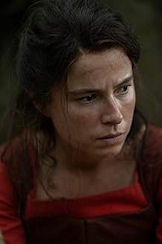
I think my very favorite part of “Hamnet” is making Agnes a herbalist and falconer. Immersed in deep lush woods, she learns what different plants can be used for medicine from her mother and as a falconer she roams the woods, setting free her hawk and whistling him back again. The film begins with her in a fetal position, cozily nested in the ground surrounded by a tree trunk’s protective embrace.
Jessie Buckley, carrying the lead of “Hamnet” as Agnes, portrays Shakespeare’s girlfriend and then wife as a fresh feminine force of life and spirit. She establishes herself as a self-sufficient, independent woman in tune with nature.
This is all a good thing as she marries a man who ends up working several days away in London for long periods of time.
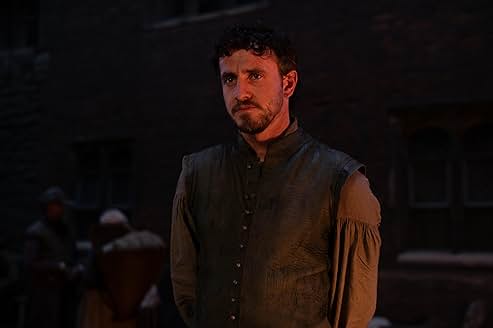
Zhao has Paul Mescal play an understated though passionate Will, never upstaging the central role of his spirited Agnes. Yet, he has his demons, and we can imagine how they affected the plays he was drawn to write.
Spoiler Alert – read no further unless you have seen the film
- But most poignantly is the death of what is most precious to us all – the death of a child, the greatest tragedy a human can endure.
Instructive, Zhao and O’Farrell show one way to live on may be to immortalize the lost person through art, in this case, making the person who has passed a hero admired, as it turns out, through eternity through immortalization in a play.
Chloé Zhao, Chinese-born and American-educated, who won Best Director for her work on “Nomadland” (2020), is the second of three women to win the Academy Award for Best Director. This film is an evolution in her art and loved by me and others who have seen it.
Credits
Director: Chloé Zhao
Screenplay: Chloé Zhao and Maggie O’Farrell
based on the novel, “Hamnet” by Maggie O’Farrell
Executive Producers: Laurie Borg, Kristie Macosko Krieger,
Producers: Nicolas Gonda, Pippa Harris, Liza Marshall, Sam Mendes, Steven Spielberg, and Chloé Zhao
Co-Producers: Maggie O’Farrell and Caroline Reynolds
Cast: Jessie Buckley, Paul Mescal, Emily Watson, Joe Alwyn
Cinematography: Łukasz Żal
Editors: Chloé Zhao and Affonso Gonçalves
Official Website and how to view: https://www.hamnetmovie.ca/home/
. . .
Join us on Facebook at
http://www.facebook.com/itsjustmovies!