Oh, my precious Norway, you consistently rank in the top 10, amongst other Scandinavian countries, of the happiest in the world. You have one of the safest, most comprehensive, caring governments on the planet, yet it’s from your country we get your consistent exploration of the dark side, like Edvard Munch’s multiple creations of “The Scream” (1893), meant to convey, not gently, the existential horror embedded in the human condition.
Your tortured filmmakers are famous for looking under that rock of outward happiness to explore the deeper, suffering character underneath.
Joachim Trier, director, and his writing partner, Eskil Vogt, masters of Norwegian exploration, begin their story, “Sentimental Value,” with a personification of the family house, which may also represent Norway, painted in lively earthy oranges with plenty of wood carvings and character.
But while the house talks about its life, a foundational crack, beginning in the basement, is revealed. Through time, it unravels upwards through the house and its inhabitants. Perhaps it is an imperfection in the construction or genetic chain that cannot be healed until the entire house, or family, is deconstructed.
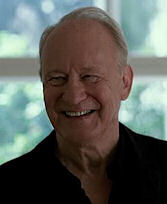
Trier takes us through the life of the house, chronicling the history of the family until we end up in the present time. The patriarch, Gustav Borg (perfectly played by Stellan Skarsgård), who earlier had abandoned the house and its family, returns as a successful filmmaker. He has written his greatest masterpiece, and he would like his estranged but famous actress daughter, Nora (outstanding Renate Reinsve), to play the lead.
Ah, but why should she have anything to do with his play or him? Despite his relocation to Sweden, with an easy transit to Norway, he has never even bothered to come see her in any of her plays. As a matter of fact, there is no mention that he has bothered to come to see her in any capacity. She flatly turns him down.
At the center of all of this abandonment is the ultimate rejection of people and life, which is the suicide of Gustav’s mother that occurred in this house when he was a young boy.
Trier demands the mindful attention of his audience in this deeply insightful film. What I appreciated, and really needed, most of all was his juxtaposition of two archetypes of disparate national personalities: Norwegian angst vs American freedom.
Enter Rachel Kemp! Gustav serendipitously meets Rachel, a famous American actress, played by a deeply connected Elle Fanning, who complains she is chained by contracts. Gustav liberates her from her handlers on the beach. He calls a beach cart, has her get in, and she is happily off, without cell phone, rushing at the water’s edge with driver and horse. Staff run futilely after, calling out.
Soon he offers the newly liberated young blond the rich part of his protagonist, rejected by his daughter. She accepts.
This is where the film twists into the depths of the human psyche. No one is happy as Gustav doggedly uses the American and his ancestral house as the set for his masterpiece until he allows the pieces to deconstruct into what they should be.
Nominated for Best Film (Palm d’Or) and winner of the Grand Prize at Cannes, “Sentimental Value” so far has won 14 awards with 90 nominations. It is Norway’s entry for the Oscars’ Best Film in a Foreign Language category. It’s a challenging view, but art at its highest creative point.

Credits
Director: Joachim Trier
Writers: Eskil Vogt and Joachim Trier
Producers: Maria Ekerhovd and Andrea Berensten Ottmar
Cast: Renate Reinsve, Stellan Skarsgård, Inga Ibsdotter Lilleaas, and Elle Fanning
Cinematography: Kasper Tuxen
Editor: Olivier Bugge Coutté
Music: Hania Rani
Release: Nov. 7, 2025 (limited)
Official website and how to see: https://www.neonrated.com/film/sentimental-value
. . .
Join us on Facebook at
http://www.facebook.com/itsjustmovies!